
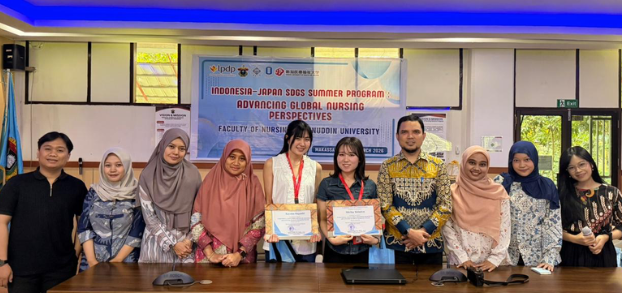
The program involved two students and ran from March 1 to March 17, 2026. The program officially opened on March 2 with an introduction to Hasanuddin University (UNHAS) which was formally opened by the Head of the International Office of UNHAS, Andi Masyitha Irwan, S.Kep., Ns., MAN., Ph.D., and was attended by the Dean of the Faculty of Nursing, Prof. Elly L. Sjattar, along with the Vice Dean for Academic and Student Affairs, Syahrul, S.Kep., Ns., M.Kes., Ph.D., and the internationalization team of faculty of Nursing.
Participants also joined adaptation sessions and were introduced to academic and clinical learning environments, Indonesia health system, and campus tour.
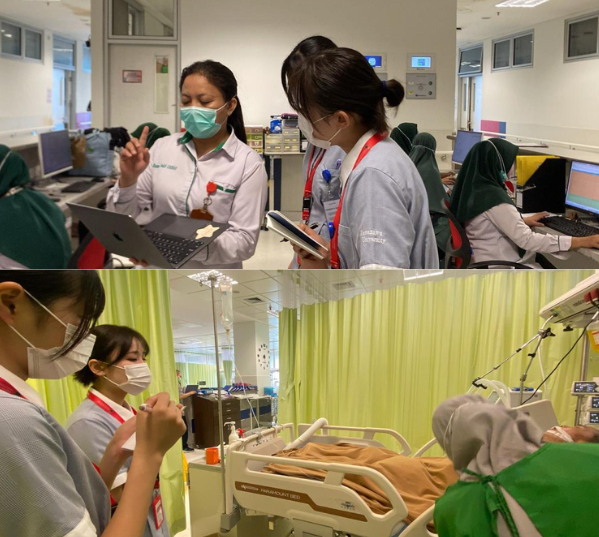
A major part of the program focused on hospital-based activities at Hasanuddin University Hospital. Students observed patient care in multiple departments, including emergency, intensive care, maternal, pediatric, and chronic care units. In specialized units, they observed procedures like dialysis and chemotherapy. These sessions allowed participants to observe multidisciplinary care, understand patient management across life stages, and explore advanced medical technologies in practice.
As a complement to hospital-based learning, students also visited various specialized healthcare facilities, including a mental health hospital and a wound care center (Griya Afiat), to deepen their clinical understanding within more specific care contexts. In addition, visits to a primary healthcare center (Puskesmas), observations of school health programs at the elementary level, and a visit to the YKAKI Foundation in Makassar for children with cancer in provided a more comprehensive perspective on the integration of healthcare services in Indonesia, particularly in promotive, preventive, and pediatric support aspects.
To further enrich the cross-cultural dimension of the program, participants engaged in experiential cultural learning through visits to several historical and cultural sites, such as Balla Lompoa, the Makassar City Museum, and Bantimurung. These activities not only broadened participants’ insights into local values, history, and social context, but also strengthened their understanding of the interconnection between culture, health, and well-being from a holistic perspective.
The program concluded with final presentations on March 17, where participants reflected on their clinical experiences, cultural learning, and perspectives on global nursing and SDGs, highlighting the valuable hands-on exposure gained throughout the program.